The Gift of Sadness

I started a newsletter because I like to read newsletters. This is my first bit of writing for it. If you want to read about things I love — running, climbing, being a dad, and making a fool of myself, but rarely in that order, you can subscribe here.

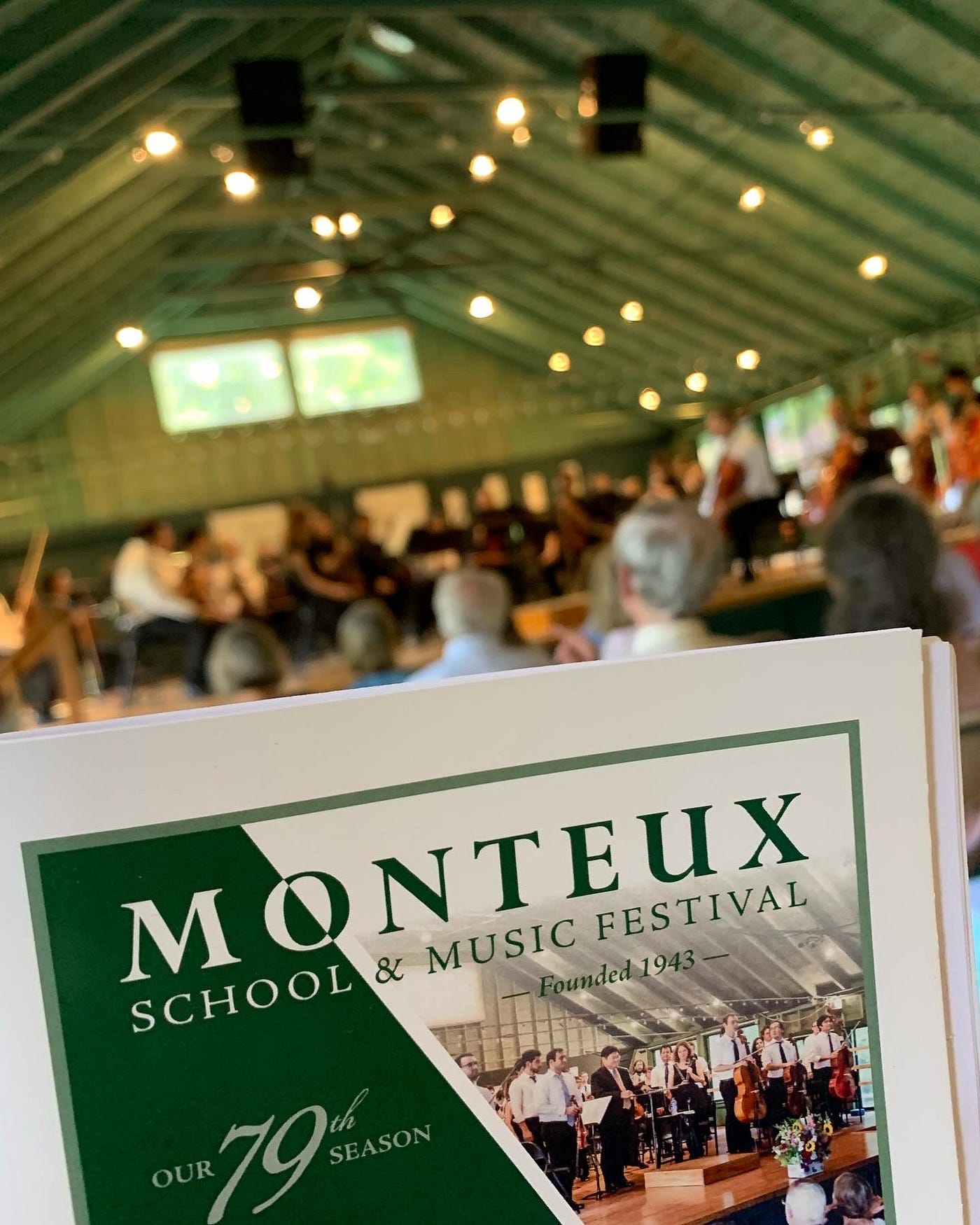
My wife and I took a short trip to Maine to see my daughter perform at the Monteux Music Festival. It’s an amazing program founded by French conductor, Pierre Monteux, in 1942. It’s a conducting school where some of the best young conductors come to train through the summer. Other musicians from around the world audition for spots in the orchestra. They practice hard, live in cabins, form bonds that you can only form when you train hours and hours every day with someone, then party until the early morning and do it all over again. They play a concert every weekend for the locals and vacationers in a beautiful area of Maine near Bar Harbor.
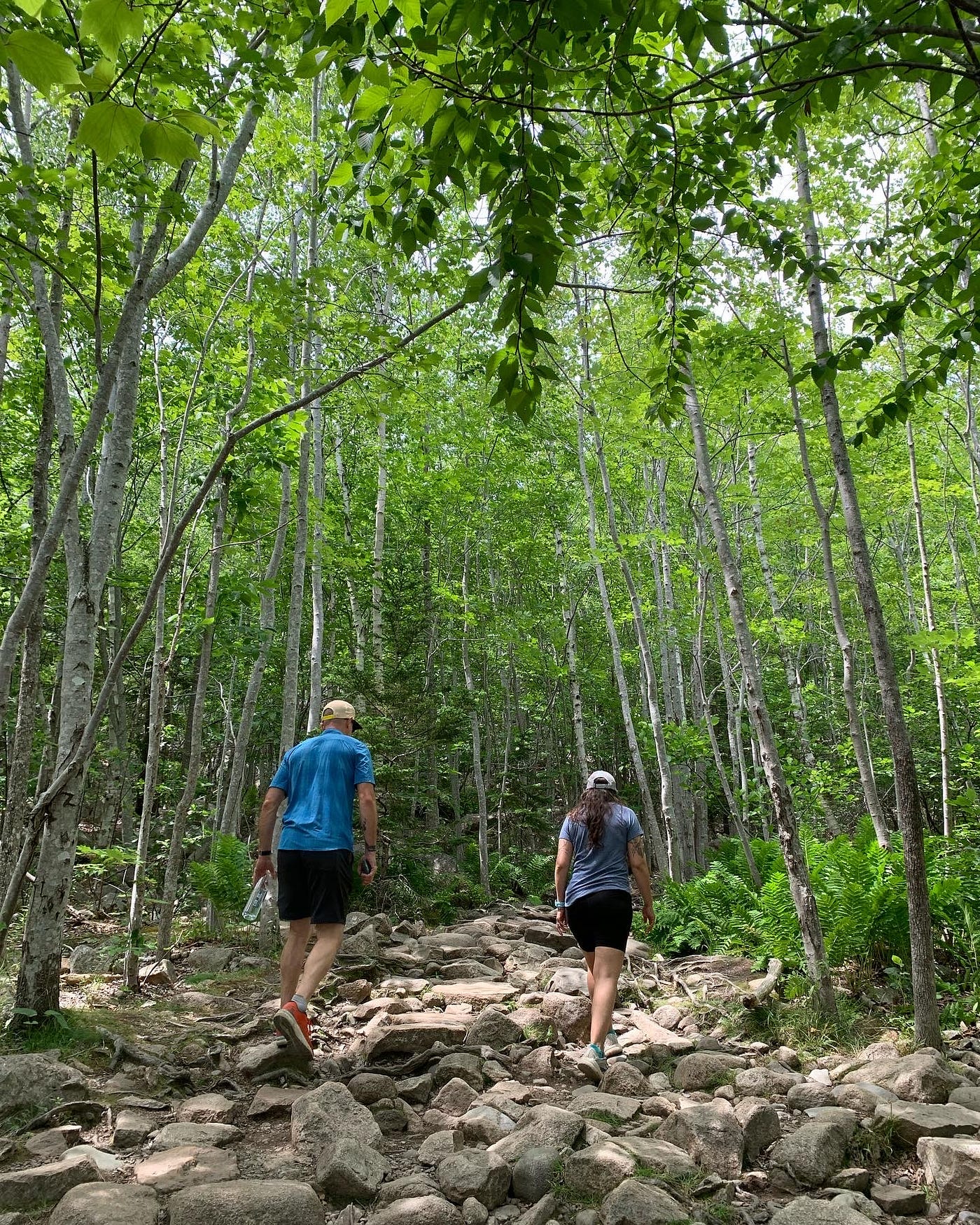
Acadia NP
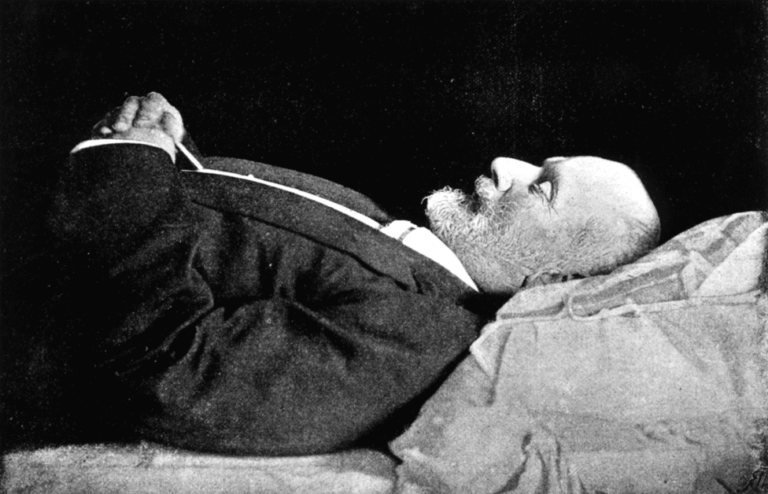
Funerary photo of Tchaikovsky
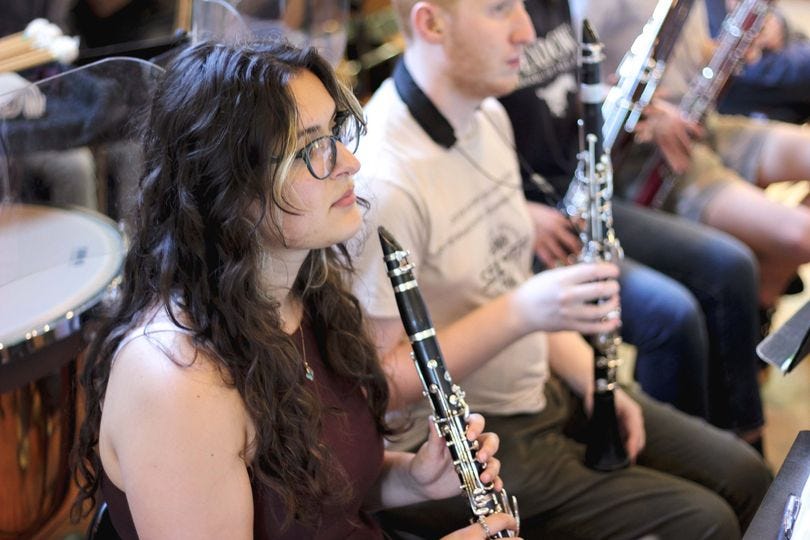
In her element (photo by Sandy Marcotte)

The More Things Change


My favorite running route used to be a narrow, rutted, and rocky dirt path that led past a hidden pond on the way to winding singletrack that led up to a summit overlooking the Pacific Ocean to the west, the San Bernardino mountains to the north, and the Cuyamacas and Tijuana Plateau to the south. At the top of the peak is an American flag. It used to be weathered and wind-torn but has since been replaced with a new flag complete with a solar-powered light that illuminates the flag at night.

The first No Trespassing signs starting popping up years ago as our little piece of the North County San Diego suburbs started to grow. Narrow trails I had run in high school became access roads, and later 2- and 3-lane roads leading into and out of our expanding neighborhood.

We searched for new trails back then, combining animal-made singletrack with adventurous hiking and mountain biking trails, and firelines. Many of my exploratory runs ended in dead-ends and bloody, sliced-up shins and thighs, but we managed to put some fun routes together. The crowning glory was a 26-mile all-trail loop marathon, which was quite a creative task given the roads, and the private property that we did our best to avoid.

As the neighborhood was built out, more people started to use the trails. I wrote an article for our monthly neighborhood newspaper about the local trails and gave turn-by-turn directions to some of the easier ones. I was doing one of my regular runs on a horse trail when I passed a girl who had stopped and was looking, puzzled, at a newspaper clipping. She looked pissed, so I didn’t stop. The hills in our area were a surprise for people who were used to running along the flat coastline, but I ate them up.

As the town grew, the access shrunk. Park rangers informed us that we couldn’t access the reserve near our neighborhood from the west side, and property owners who noticed new trails put up signs and fencing on the lands we didn’t know were private. There were still miles and miles of trails to run, but as the town grew, and the barriers multiplied, we became less exploratory and more quotidian with our routes.

It’s still a beautiful area to run and live in, but a lot of the beauty has been shut down. I’m not going to get into the morals and ethics of trespassing and land rights. I respect the landowners here and do my best to obey the law, but it does make me extremely envious of the right to roam laws in other countries.

My favorite trail leading up to the flag is still there, it’s still a beautiful run, but the access trail leading up to it is now a black, paved road. It’s the kind of soft asphalt paving that is going to leave footprints in the hot summer. There is also a ten-foot-tall grey iron gate with NO TRESPASSING welded into the industrial design along the newly paved road. The gate has not closed yet, but it will.

There’s a scene from The Simpsons that shows a newspaper clipping of the Grandpa yelling at a cloud in the sky, and the headline reads, “Old Man Yells at Cloud.” I laugh every time I think about the headline. Things always change, and it’s mostly useless to get mad about the changes, but sometimes it feels good to yell at the clouds.

My favorite run of the week starts and ends at a local brewery in our town square. On any given Thursday night, between 10 and 20 (mostly) guys will gather at 5:30. Some are already sweaty and warmed up from a pre-run, and some look nervously at the ground, and at the group of runners because it’s their first time, and they don’t know what to expect of the group’s pace. Looking at some of the regulars, the new runners have a right to be concerned. There are a few marathon winners in the group. There are also many ultra-marathon podiums shared among the faster members. The new, maybe inexperienced members have nothing to worry about.

It’s a short loop, 4–5 miles depending on the finishing options. We re-group at about every mile so nobody gets left behind or lost, and it’s a social group. We talk about families, work, and mostly just running. We talk past races, future races, weekly mileage, and injuries. We also talk local trails.

For some of these new runners, this is the first time on these trails that have been flattened and widened by hundreds of thousands of footfalls and knobby tires. A lot of the runners are younger and newer to the area. They are starting to connect the local trails to make new loops, connections that I hadn’t even considered.

The chatter becomes less and less as we approach the end of the loop. Some of the faster guys break away for the last quarter of a mile or so. It is a Strava segment after all, and you don’t age out of competitiveness.

The conversation starts up again at the brewery as we rehydrate. They talk about weekly mileage and plans for a long weekend run, and I talk about my injuries, and why I can’t run longer than five or six miles. They talk about new routes, and I talk about the new gates and no trespassing signs. I find myself slipping into the old-timey, curmudgeonly, Andy Rooney role, but hold back because nothing can dampen these new runner’s excitement for races, weekly mileage goals, and miles and miles of undiscovered trails.

Breaking the Toilet Paper Finish Line


The best part of a 5:30 AM start is the sunrise. We gathered around and I started the pre-race briefing. I felt the same nervous energy I feel at every starting line. As the assembled group of friends looked to me for directions for the next 3–6 hours of their lives, I was grateful for them, but also scared.

San Diego has hills. People see the Chamber of Commerce’s pictures of palm trees and the ocean, but also we have rocky, single-track trails, rattlesnakes, and some climbs that, can rival a tough mountain race.

My goal was to create a tough mountain race in my backyard. My goal was to rival the elevation gain of Pike’s Peak at over 7,500 feet. I fell short of that, but I did manage to put together a course with about 5,000 feet more gain than the “hilly” Boston Marathon.

I don’t live in a rural area, so I had to get creative with a 26-mile loop that stayed almost exclusively on trails. I live in North County San Diego, part of the sprawl that starts near the border of Mexico and crawls up the coast where it pauses at Camp Pendleton before it continues to Los Angeles. The beautiful thing about where I live is that some of the open space was preserved by the city or county planners. They opted for dense, rather than wide growth, so while our houses seem stacked on top of each other, we have miles of trails right outside our front doors. The trail linking project was something that took a lot of work and creativity, but I loved doing it.

I would dream about sections of the course, and I’d wake up with new ideas for the race. Go right at the water tower, and run down the steep dirt path before taking a sharp left at the second power line access trail and cut through some desert scrub and manzanita to the horse trail that takes you up to Paint Mountain. At the top of Paint Mountain, you’ll see a notebook containing hand-written quotes. Tear out a page from the notebook to prove you made it to the top of the section (hat tip to Laz and the Barkley Marathons).

After finalizing the course, I thought of a handful of people that this particular type of suffering would appeal to, so I sent out an email to about eight people. Word got out, and by the time we hiked to the top of Double Peak for the 5:30 AM start, there were 30 of us taking in that sunrise.

I gave a disclaimer about the difficulty of the course, and I promised a very difficult day on the trails. I told them they would need to be self-sufficient, but also take care of each other. I warned them about the lack of aid stations and the absence of a capable and responsible race director to complain to.

I started the day with 26 miles in my legs from the previous day. I marked the course with flour arrows, so people would know where to go. The only way to mark a course this remote was to run it, so I marked the first 13 miles in the morning and the last 13 miles in the evening the day before the event.

I emailed the route to everyone who was planning on running the race, but this was before it was easy to load routes on a GPS, or maybe route-finding was part of the appeal for this group. My course overview was not very clear, and went something like this:

Once you hit the dam, go up the El Cielo trail along the side of the dam to the Equine Incline Loop and then run down the Way Up Trail, cross the street, run up the steep concrete access road and you’ll see a narrow single-track trail on your left. Take that and head towards Mount Whitney. Not that Mount Whitney, our 1500 foot version of Mount Whitney.

When you descend, run by the old wooden shack where the guy should be out waving to you. I gave him a six-pack of Coors Light yesterday and told him a bunch of runners would be passing by his house in the early morning, and please don’t shoot us, and if it’s not too much trouble, could he chain up the Pit Bull?

He was out there on his wooden porch, cheering and toasting us with his AM Coors Light.

I told the runners not to expect aid during the run, but my wife was out there anyway, driving from spot to spot with water, cut up oranges and watermelons, and homemade “You’ve Got This” signs. The aid stations were a great addition, especially as the sun burnt through the morning haze.

The last climb was back to where we started the race over four hours before. It’s a hill called Double Peak, and I know every turn, every wind in the trail, every rut, and I didn’t think I could make it the quarter-mile to the top. I sat on a concrete curb and told April and Paul that I just needed a break. I told them to go on and finish, and I’d see them at the top. We’d spent the last few hours running together in this organic trio. We shared race stories, we laughed and we struggled together.

They wouldn’t go on.

April sat next to me and told me to take my time. Paul told me we were going to finish together. I got up and slow-hiked to the finish where a few of the early finishers, some friends, and some family were waiting.

My daughter hung a string of beads held together by a leather strap over my neck. She bought beads and made 30 unique finisher medals. She had been working on them for a week. Travis had brought some homebrew. My friend’s wife and my son stretched toilet paper across the finish so everyone could break the tape at the top.

From where I sat, I could see the ocean and feel the cool air against sunburned shoulders and tired legs covered to the knee in red dirt. We sat as people finished, sometimes solo, sometimes in small groups. I hugged everyone that crossed the line that day after Sophie hung the strand of beads over their necks. Some cursed at me as they finished, but they did it with a smile.

A lot of the people who ran the race with me that day have since moved. I still talk with most of them and still run with a few. We run on the same trails, but that loop is now inaccessible for running. Different entities control various parts of the land. Fences, gates, and No Trespassing signs have gone up as more houses have been built. Rangers turn me away, trying to explain the confusing and ever-changing rules. They can’t be bribed with a 6-pack of cheap beer.

That medal still hangs on the doorknob in my office. Every time I look up at Paint Mountain, I think of a Kathleen Harris quote on the sweat-stained piece of notebook paper, “Don’t fear moving forward, fear standing still.”

Everything about that day was about our small running community and family — from the handwritten notes, to the marking of the course, the aid stations, the finish line tape, and the beaded finisher’s medal that holds a special place in my heart.

Major races are getting canceled along with other large group events. I hope that they will return once things get back to normal, but these small races will come back first. Runners will be forced to get back to the roots of racing. The gatherings of a few friends, some flour arrows to mark the path, some stashed orange wedges and water, and if you’re really lucky, a toilet paper finish line and a strand of beads around your neck.

It’s going to be a while before any of us stand shoulder to shoulder with thousands of other runners waiting with a mix of excitement, nerves, and dread, in the starting corral. It is more realistic to think that one of these home-grown events will be in your future.

Here’s how to plan your own:

Technology

Get comfortable with a GPS mapping program like CalTopo, Gaia, or Gmap Pedometer. I used Gmap Pedometer for my planning and I like it because it is simple to use, it keeps a running distance total as you plan the route. Most importantly, it’s free. Send the route to the participants and they will be able to load it on their own devices. That way, nobody can blame you for getting lost. You’ll want to be familiar with the area you are running. Make sure to buy the guy with a scary dog a 6-pack of Coors Light when you ask him to keep the dog on a leash the next morning.

Participants

Don’t let it get out of hand. Only invite people you trust will be able to finish the race and people who have some experience running trails without aid stations. People need to be self-sufficient with these types of races. This will also help you limit the number of people to a number you feel comfortable with. It helps to know everyone as well, just in case something goes wrong (you also may want to have participants sign a waiver, just in case).

Volunteers

People want to help. As most trail runners know, it’s at least as fun volunteering for a race as running one. Some people will actually be relieved that you asked them to help rather than asked them to run. Get the family involved as well. My family still has some of our best memories while volunteering for races, and the kids actually love contributing. My friend Joe’s whole family set up an aid station at the midway point of our trail marathon. The amount of good karma and love they received that day will tide them over for years.

Extras

We had custom shirts made. They are a collector’s item in our area. Use a web service that will let you place small orders, and design them yourself. They won’t be as flashy as the big-name marathon tech tees, but they will mean more to you. Trust me. The same holds true for the race medal. It doesn’t have to be fancy, but it will take a special place on your doorknob, in your medal drawer, or wherever you keep your stash. One last thing, don’t let the day end at the finish line. Get everyone together for pizza and beers to relive the stories. The friendships, the bonding, and the tales of suffering and overcoming are why we do this. That’s not going to change whether you finish on Boylston Street or at the top of a hill called Double Peak as you break through a makeshift toilet paper finish line.


Adventure in the Time of Covid


Yes, this is a hard, unprecedented, difficult, uncertain, scary, pick your darkly ambiguous adjective time. We’re stuck at home. The news is constant now. The constantly updated death toll. The constant reminder of how we failed to prepare. The constant decline of the stock market. The kids constantly on their screens. I looked at my youngest daughter’s search history and she was searching for how viruses spread and Covid death rates. Okay, not going to lie, there were some makeup and TikTok dance tutorials scattered in there, too.

Through all of this uncertainty, there has been a pause, and I am thankful for it. Because we live near open, nearly empty trails, my wife and I continue to work, our kids have access to their teachers, music lessons and soccer coaches (all online now). My son has a skateboard and a mountain bike. One eats curbs, the other eats trails, and they both eat hours. My oldest is continuing her college clarinet studies and filling our house with beautiful music and the muffled, frustrated crying that artists will recognize as growth.

We are privileged, and I am grateful. And my heart aches for people who aren’t as lucky, people who have lost their jobs, and people who are dealing with the death of loved ones. It is a scary time, and I’m not trying to minimize it.

This will affect everyone in some way. I wake up at 2 AM, worried about how this will affect my kids, and I can’t go back to sleep.

I worry about my wife, who spends 12 hours a day in the ER and won’t tell us the worst of it because she knows we can’t handle the details. Sometimes she will just say it was a hard day and go upstairs to shower, and I can see how hard it was in her eyes, and she won’t let me hug her in that moment and that’s really all I want to do.

My kids sleep until 9 or 10 AM, and I let them. The school sent a bell schedule and I see others posting their amazing homeschooling routines. I hope to get there, but to be honest, as long as we all come out of this still loving each other, I’ll consider it a win.

I was initially excited in the early stages of our self-quarantine (we started earlier than most due to my wife’s patient interactions in the ER). I just assumed we would get outside for most of the day. I was already making a mental checklist. We would hit the trails for a run, surf, go to the climbing gym, daily yoga session, and a camping/climbing trip to Joshua Tree.

This was before the mountain towns, the gyms, and the beaches closed. This was before we knew the ramifications of most of these activities. This was before the term social distancing became less of a vague notion and more a concrete law. In my neighborhood, people have been posting pictures online in an attempt to publically shame neighbors who might walk a little too close to each other.

Self-quarantine became about self-isolation as we learned about flattening the curve. It felt like a dark hazy cloud was settling over my head. I would wake up, turn on the news, and break the day up by snacking, planning what to buy from the grocery store, planning what to eat, and eating.

I’ve alternated between two pairs of sweatpants for the past 3 weeks.

I’d still get out and run or bike occasionally, but by myself, and I’d still try to get some online work done, but it’s a battle and laziness is winning.

Spring in San Diego is a beautiful time, and day 14 of quarantine was especially beautiful. It was a Sunday. The sun was out, the clouds were feathery and the breeze was cool enough to make walking in the sun with t-shirt and shorts comfortable.

My wife was at work and my kids were reading the latest notifications from their friends and I was watching the news say the same thing over and over.

“Let’s go,” I said. They all were quiet, and they knew that there was no getting out of it, so with the solemn resolve of a prisoner walking to the van after the guilty verdict has been read, they changed out of baggy sweatshirts and cat-fur covered flannel pajamas into shorts, t-shirts, and running shoes.

We’re lucky enough to be able to cross the street and immediately be on muddy, rocky paths with yellow wildflowers and trees that have grown from saplings to 20–30-foot beauties in the 15+ years we have lived here.

As a long-time trail runner, I dreamed of having a running family. A legacy of cross country runners that a running magazine would feature someday. All bouncing along together in perfect stride, my daughters with their long brown hair, catching the golden rays of the sun, and my son with his “Like Father, Like Son” tattoo à la Matt Centrowitz covering his gaunt, slightly shrunken runner’s chest.

Didn’t quite work out that way. They all lasted through middle school cross country before deciding that isn’t the type of suffering they wanted to subject themselves to. I shouldn’t be surprised. My running journey was full of starts and stops, and I didn’t really learn to love the suffering until I was an adult with three young children. Running became an escape from a different kind of suffering.

So now, when I say “Let’s go,” I don’t say “Let’s go for a run.” But I’m not fooling anyone.

We headed to the meadow. We call it the meadow in our family because it doesn’t have an official name, or maybe it does, but if you head down a muddy and rocky singletrack trail, cross two streams, go through a natural tunnel where the branches of the trees have joined overhead to create a canopy, past a small waterfall that was rushing harder than usual thanks to the recent rains, avoid the poison oak, and cross the wide and deep mud pit using a rope hanging from the oak overhead and a couple of two by fours that some kind person hauled there (and that my dog fully ignores), you will reach our meadow.


This pause has come with a quietness. Less people outside, and fewer cars. But it is so much louder in other ways. The laughs were louder. You could hear the rushing stream from further away, and there were more birds singing, or maybe I could just hear them now.

Our family hike inevitably turned into a run as we headed down the steep and rocky singletrack in order to get some momentum for the jump across the stream where we all got at least one shoe wet.

Last weekend was Easter Sunday and I watched as Andrea Bocelli sang to the empty streets of Italy. His music was cut with drone shots of empty city centers. There is something peaceful about emptiness. It’s not really empty, or lonely, it’s just quiet. And the music filled the space. The pull of nature is the same.

We seek that quiet emptiness. It fills us.

After our hike, we all returned to our screens. Me to my computer and the kids to their phones, but we were all a little happier than we were before we went out.

I’m still scared for my kids, and what they will remember about this time. Hell, I’m scared for myself, but what I hope to remember is that short family outing from our front door. My 13-year-old daughter and 15-year-old son sharing a seat on a rope swing, laughing, and not even trying to elbow each other off. I’ll remember sitting in the driveway watching my son master a trick on his skateboard or listening to my daughter practice her clarinet or the walks with the dog in the early mornings on empty sidewalks. I’ll remember the fear and the uncertainty as well, but things are rarely all bad. I hope that years from now when we talk about the coronavirus, my family will remember these small things and the way we filled the emptiness with something beautiful.

Riding the Wafer...The Worst Parade Ever

I wasn’t a cyclist before Sunday.

There are some unwritten rules of biking, and I’m sure I’ve broken all of them in the last few months of training leading up to the Belgian Waffle Ride. I didn’t shave my legs, I rode with spandex on the mountain bike and loose shorts on my road bike. I actually didn’t even ride a road bike, I bought a used cross bike for a couple of hundred dollars from a nice guy who rode it across Belgium in the pouring rain. He threw in the panniers and a helmet and shoes that were a little too tight. At least I was smart enough to not throw the luggage racks on during the race.

The Belgian Waffle Ride can be intimidating. Just the distance is intimidating, and then you have a look at the elevation profile, and check out pictures of people who finished covered in a mixture of blood, dirt, spit, tears, snot, and mud. The full Waffle is 134 miles with over 10,000 feet of gain. The shorter, humbler Wafer is 74 miles with 5,300 feet of gain. Rolling into the expo to pick up my number, I couldn’t help but notice the veins, rolling like ropes up these men and women’s smooth calves. They also had shorts that matched their jerseys. These are called kits.

I have one cycling jersey. It has a zipper in the front and pockets in the back. I bought it when I did Ironman Cozumel about ten years ago. It has a big Ironman logo on the front to let everyone who knows anything about cycling know that I can’t handle my bike in a pack for shit. It’s also brand new because when I did that Ironman ten years ago, I gave up biking. The training took too long, and with three small kids, I didn’t have the time to go for long rides. The tri bike went up in the garage, on a hook where it hangs today to serve as a warning for anyone that passes to turn around and run if they value money and/or time.

The morning of the race, the organizers of the Belgian Waffle Ride laid out a gluttonous breakfast buffet of bacon, waffles, and melted butter. I skipped the bacon but did down a couple of waffles dripping with melted butter. All races should have waffles at the start, especially 5Ks. It would make watching them way more interesting.

I felt all tingly waiting for the start, but that may have been the minty Assos chamois cream I’d slathered all over my taint and undercarriage area. The organizer gave a speech about how we are all friends in a giant parade and how we need to look out for each other, a kid played an awesome, guitar-version of the National Anthem while standing on top of an RV, a mariachi band played, and we were off.

I’m not going to bore you with every detail of the race, I’m just going to bore you with some of the highlights.

The start is on road for about 10 miles and most of the 6–700 people stay in a tight group. The group goes pretty fast because the people in the front of the pack break the wind for everyone else, so you just have to bike behind someone in front of you, and not slow down and not waver in your line while you’re making a turn, and bike super straight, and not veer to the right or to the left, and you will not crash, and have the 300 or so people who are riding behind you run over you and then they crash and you have ruined their day. Did I mention that I used to be a triathlete and most of my biking experience had been of the solo variety while riding in a straight line on aerobars? You aren’t even allowed to be within 10 feet to the cyclist in front of you when you’re racing a triathlon. This pack riding was new to me, and luckily, I didn’t ruin my or anyone else’s day.

I did go down once, pretty hard, but it was in the soft dirt. I was leading a group of about 5 or so, and by leading, I mean there were probably 5 people behind me waiting for a good time to pass. A mountain bike came the other way, and I tried to turn, but my front wheel caught some sand, so I went down. Hurt my knee a little bit, but I was thankful when I looked back at the guy who was following me skid to a stop inches away from my head.

Cross racing is a cross between road and dirt biking, with a bike that isn’t entirely suitable for the road because of its big tires, nor is it suitable for the trails because of its skinny tires. Despite this, cross racing is so much fun. I rode through streams, on singletrack, over gravel, up and down some twisting climbs, and the road sections weren’t any easier.

I was told there would be women with bikinis handing out bacon at an aid station called The Oasis at mile 60, at the base of the hardest climb of the day. When I arrived, there was bacon, but no bikinis. My spirits were a little low at this point, but it had more to do with the upcoming climb than the bikinis. Everything changed a few miles later when I biked past my house and my son and daughter were there waiting for me. My son handed me a beer which made up for the lack of bikinis at The Oasis. I guess I’ve changed.

Near the top of Double Peak (don’t mistake that grimace for a smile)

Adam and I shared the beer before we started the climb to Double Peak. Adam is a guy I’ve known for over 20 years. He came down from Santa Cruz to do the race with me, and he prepared by going to Colombia and cycling the longest climb on earth (over 10,000 feet). I prepared by climbing the Hills of San Elijo, but somehow I always left out Double Peak. That’s the high point of the Wafer ride, and it’s the only time that I considered dismounting and walking the bike. I should have as it would have been faster than my cycling pace.

Me and Adam in the early miles

It went mostly downhill from there, but in a good way. I hit 45 MPH going down Twin Oaks, which is fun until you start thinking about all the things that could go wrong. I got into a pack in the last mile and asked who was willing to lead me out for the sprint. I was saving that bit of cycling lingo for the end, but nobody laughed. Maybe everyone was just too tired at that point, or maybe it just wasn’t as funny as I thought it was. So, in typical dad fashion, I sped up to another guy near the finish and asked him if he would lead me out for the sprint. He chuckled. Success. Then he dropped me.

The finish area was awesome, but when the finish line is Lost Abbey, it has to be good. I sat with Joe and Adam, nursing the free beer, comparing battle scars and swapping stories. It was weird because if there had been a registration booth at the finish line, I would have signed up right there. I never have that feeling after a race. It usually takes a couple of days for the memory of the suffering to fade, and the good sections, the afterglow to come into focus before I’m ready to commit to another one, but this time I would have signed up again on the spot. I was covered in dirt, my teeth were gritty, the blood and mud mixture had dried on my knee, and I felt like I was going to throw up. But sitting there in the sun with hairy legs, a gritty smile, in my one and only cycling jersey, I felt like a cyclist.


I can’t wait to do this race again next year, but if they’re going to call it a parade, there better be some floats and beauty queens throwing candy. For now, I’m bathing in CBD cream and waiting for the appropriate occasion to pop the Lost Abbey Belgian Ale. Thanks to Joe, Adam, Ed, Chi, Craig, and others for sharing some of the road and race miles.

Sunsets

Do not go gentle into that good night
Old age should burn and rave at close of day
Rage, rage against the dying of the light.
-Dylan Thomas 
No, I'm not dying. I mean, we're all dying, but I hope to live a good while longer. My running career, on the other hand, is in its last stages, and that's difficult for me to deal with. It's difficult because, for the past 15+ years, I've defined myself as a runner. Labels are dangerous, but runner, or more specifically, "trail runner" was a label I was happy to take on. I wrote about running, I made a dumb Youtube video about stupid things that trail runners say, I planned vacations around running. Running connected me to some of my closest friends. Through running, I experienced some of the best moments of my life, and also one of my greatest disappointments. 
Dealing with not-running, with the slow death of that part of my identity has been difficult. I am self-aware enough (just barely) to understand that this is about as a first-world problem as poor wifi. Even though I tell myself not to be so dramatic, that sentence up there at the top of this paragraph shows how well I listen to that inner voice.
About four years ago, while hiking the High Sierra Trail, I started to notice pain in both of my heels. The pain would be pretty bad in the morning, but after a few miles on the trail, it would go away, only to reappear the next morning. I figured it was a side effect of hiking the High Sierra Trail. 
I thought the pain would go away with time off, but it didn't, so I just dealt with it. 
I took up yoga, I stretched, I bought and used a variety of weird looking devices that gather at the foot of my bed, and I'd hide them from the housekeeper if we had one. I went to chiropractors, massage therapists, physical therapists, ART specialists, and I decided not to punch one of my running partners who asked if I'd tried stretching. My wife got me to try some capsicum cream which is basically like rubbing habanero peppers on your skin. God help you rub your eyes or worse with that cream on your hands. CBD cream, with all its hype, actually really helped with the pain and inflammation (it worked so well for me that I became a rep). None of this stuff cured me, but the combination helped mitigate the pain. I would run one day, take the next day off. On those off days, I limped, and inevitably would be asked why I was limping. Usually, I just said I was getting old. 
Finally, I went to a podiatrist and was diagnosed with Haglund's deformity in both of my heels. I hate that they call it a deformity because it's just a bone protrusion on the heel. I love feet a little too much, so it's hard for me to deal with a deformity in my own feet. The podiatrist said it's also called "Pump Bump," and that just sounds so much worse. I mean neither would work on an online dating profile, so when people ask why I'm limping, I usually just respond that I pulled a calf while weeding the yard, or something that sounds slightly less embarrassing than, "oh, this…this is pump bump." 
The doctor said he could open it up, detach my Achilles tendon, shave down the bone, then reattach the Achilles. He would have to do one heel at a time with months of recovery between the surgeries. He told me, with a smile, that with a full recovery I would be able to run 3–4 miles pain-free. One of the hardest parts of all of this is that I have goals that will be unfulfilled. I tell my kids they can do anything. They can overcome the greatest odds, but sometimes that's just not true. I will never run a 100-mile race. I'll never break 3 hours in the marathon. 
In trying to minimize the pain, both the physical and the kind in my head, I've tried to stretch out and do new things. I signed up for the Belgian Waffle Ride. It's a cyclocross race, so it's not quite road biking and not quite mountain biking. The full version has a 60–70% finish rate and it bills itself as one of the toughest bike races in America. I'm doing the half this year, and if I survive, I'll do the full next year. Any ride that starts with waffles and ends at a brewery can't be that bad. 
In training for the ride, I've been risking my life in the hopes of keeping up with my daredevil son on the mountain bike. Luckily, I'm done having children, because certain body parts have taken more of a toll than others. Yes, I'm talking about my balls. 
My son has an amazing sense of comfort on the bike that I just don't have. He flows through the turns and flies over the jumps with grace. He doesn't fight the bike. On the other hand, I'm not allowed to break the first rule of bike fight club, so let's just say I'm not quite as graceful. It's been fun to watch him develop this passion and to be able to share in some of his rides. He's still at the age where he'll occasionally ask me to join him for a ride or to take him to a different trail system than the ones we have within biking distance. I've always told my kids that I'll never say no if they ask me to do something active with them. I may regret that soon. 
Glad I didn't say no to this ride
I'm still running, just slower than usual, and with more pain, but as they say on Brokeback Mountain, "I just can't quit you." Maybe it's the simplicity of covering long distances with minimal equipment, or it could be the hours spent talking through histories that I can't get anywhere else. I'll be sitting in the lineup talking to a guy about how he is struggling to communicate with his daughter, and this is something I can relate to, and if we were running, this could turn into an hour conversation, easy, and we would bare our souls to each other and expose our fears to the dirt, the trees, and the wind. But this is surfing, and a set wave is coming. He stops mid-sentence and we both paddle for it. He has a better position, closer to the peak as it builds, a nice right. He says he's going right so I paddle hard towards the left, and it's a great wave. We both catch it, going different directions and ride it close to the shore. It's a great moment, and we both paddle back out with huge smiles. I head north for more lefts and he stays south. The conversation hangs there unfinished, but there are more set waves, it's glassy, and this is a lonely hunt. 
I ran a few days ago with two friends. We did a 6ish mile loop. One of them pushed their baby in a stroller. We walked the steepest parts of the climbs. We talked about our upcoming trip to Boulder, we talked politics and hate in the world, and of course, boobs were mentioned, mostly our own. I came home happy and full of energy. My heels hurt, but it was worth it. I wouldn't quite consider it "raging against the dying of the light." It's more like watching the sun slowly fade with the memory of that bath of color in that sweet spot that we don't like to talk about that pulls from both joy and sadness.

You Can Fly


I haven’t seen Dumbo in years, but I still get sad thinking about it. It broke my heart when I was a kid. This elephant with the big ears, stolen from his mom, picked on and forced to perform. Disney used to be dark. I can’t remember if he dropped his feather or was forced to jump without it, but the look of fear on Dumbo’s face sticks with me today.

I get it. Dumbo had to believe in himself. He needed to know that his power came from inside him, and he could fly with or without the crutch. The current issue I’m dealing with as a parent is that I’m the crutch.

I want my kids to take risks, I want them to climb, to flip, to drop in on the 20-foot halfpipe, or do a backflip off the 10-meter diving board, or even go for the slide tackle that explores the gray area of legality. I want them to fall off the bike and then get back up and try again. I want them to do all of this, and I praise them when they succeed and when they fail, but I still want to be the one to catch them, to spot them, to cheer them on, and occasionally to help them off the field when they hurt themselves.

My son has been able to do a backflip for about 5 years. He can do a backflip off the high dive, and he can do one on a skateboard off of a ramp into a foam pit. He can do one on the trampoline too, but he still asked me to spot him. By spotting him, he means me being on the trampoline with him and at the most, barely feeling his shirt glide past my fingertips while he is mid-air. Physically, he didn’t need me to spot him, and I wasn’t spotting him at all.

He can also do a front flip 180 and a front flip 360 which is kind of like a vertical and horizontal flip at the same time and looks way harder to do than a backflip. He doesn’t need me to spot him for those tricks or any of the others, but for the backflip, he needed me there. I was his feather.

Every time he asked me what trick he should do, I would say backflip. He would ask me to spot him, and I would tell him that he could already do the trick and that he didn’t need me to be on the trampoline with him and that I don’t really spot him anyway, I just stand there looking stupid, and that it would probably be easier for him to do it without me standing there because I take up room on the trampoline and I absorb some of the bounce. I gave him all these arguments, but he would ask until I eventually relented.

Last week I came home and my son ran up to me with this big grin on his face. His new trick grin. He asked if I wanted to see his new trick, and I started to head out back to the trampoline and he stopped me and said no, right here. He stood there in the middle of the living room, crouched down and did a complete backflip from standing.

I was shocked, amazed, and proud. What about the trampoline? What about the spotting? He showed me how he progressed from doing the backflip on the trampoline to doing it standing on the trampoline without jumping, then doing it on the grass, then the carpet. No spot? No, he said, I did it myself. I was as proud of him as he was for himself, but I felt like a dropped feather twisting its way to the ground.

Sharks and Minnows

Photo and cropping job courtesy of Marathon Foto

When I pictured myself running the Boston Marathon, it was cruising downhill on a crisp, but sunny spring New England day. A couple weeks out, the weather forecast called for rain, and a 15 MPH wind from the west, which would be nice. The rain would be annoying, but as long as the wind was at our backs, everything would be okay. A week out, the wind forecast shifted to a 20-30 MPH headwind with temps in the high 30s and low 40s. These were some of the worst conditions the race had ever seen.

I don’t like race reports. It’s hard to go back and be in that experience once it’s over. I’ll share what got me through the experience in the hopes that these strategies will help someone else. For Boston, I thought about middle schoolers. I should probably clarify that. I’ve been coaching middle school track and field, and it’s a good thing because that last sentence would sound kind of weird otherwise.

I’ve devised a system that works for me during races. It keeps me from thinking about how much warmer and drier I would be in the medical tent, or back in my hotel room with a hot shower and a steaming cup of coffee. I think about people I love, and things in my life that I am grateful for. During Boston, I thought about my kids quite a bit. My oldest daughter will be heading off to college next year, and it’s too soon, and I’m too young and emotionally immature to handle that. I thought about how amazing she is, and that I need to tell her I love her more often.

I thought of the middle schoolers I coach, including my two younger kids. Everyone talks about how annoying middle schoolers are. Yes, they can be annoying. So annoying. They have these chemicals in them that they don’t know how to handle, so they deal with it by being loud, obnoxious, and moody. They are also amazing to be around. They’re still kids and they do kid things like dance and sing together in practice, without the self-consciousness of high school kids, or the awkwardness of adults.

There is something about watching kids run that gets me excited. Again, as a coach. They have this naturally good form. They drive their knees, and their heels come all the way up to their butt on the backswing. Their heads are up, chests are out, and their arms drive forward. What happens to runners as we age? Why do we lead with the heels? Why do we shorten our stride? Why are we stingy with our energy? I guess we’ve been burned too many times. If I started Boston as a middle schooler, I wouldn’t last 5 miles because I’d be chasing everyone who passed me and end up running sub-6 minute pace for a few miles, then walking with my hands on my head, face flushed red, and gasping for breath. But, that form, that’s what I channeled.

We play this game in practice called sharks and minnows. Even the shot-putters play it, and they actually run. Fast. It’s a common game. One person is the shark in the middle of the field, and the other 60 or 70 kids (minnows) line up on one side of the field and try to make it to the other side without getting tagged. If they’re tagged, they become sharks. This goes on for 5 or 6 rounds until everyone is chasing the last couple of minnows. The kids complain about running repeats, but when they play this game, when they are minnows, they run 100-meter times that beat anything I’ve seen them run in a race. And they’re smiling the whole time.

We lose that smile, too. I made jokes during Boston. Freezing, soaked with rain, and I would step in a puddle and yell out “dang, now I’m wet.” People around me would laugh. And then 15–20 minutes later, I’d make the same joke, and people would smile, and then 15–20 minutes later, I’d make the same joke again, and people would roll their eyes. I’m a dad, it’s what I do. It kept me going.

Have you ever seen Kipchoge run a race? He smiles like a maniac. He’s laying down 4:34/mile pace at the end of a marathon and he’s got this huge grin on his face. He says it makes him go faster. It works. It works for the kids, too. I tell them to smile during their race, but they never do. They push, they strain, they try too hard. Racing isn’t fun, sharks and minnows is fun.

I pushed too hard at Boston. In the back of my head, requalifying was a goal, so I didn’t adjust my pace for the weather. The cold, the wind and the rain took their toll, and the too-fast start caught up with me around mile 16. I slowed down (I don’t count the intentional Wellesley slowdown at mile 13). I reminded myself that running that race was a long-term goal that I had worked hard to achieve and that I was grateful and lucky to be there. I decided to just run. I stopped looking at my pace, I slowed for water at the aid stations, and I smiled.

I probably looked like an idiot as I turned down Boylston Street and the rain came at me horizontally. I didn’t care. Mouth open, arms wide, running towards the finish with my eyes closed against the rain and the wind, and letting the tears mix in with all of it.

I recognized that feeling, that middle school not caring how much is left, or who is watching, or what time I’m going to get, or how I’m going to make the two-mile post-race walk back to the hotel while dealing with hypothermia. I was fully in love with that moment, legs stretching, but not forcing anything, running like a middle schooler avoiding the sharks in the middle of the field like my life depended on it.

Special Places


The house on Rios wasn’t much of a house at all. It was a brown duplex, a long rectangle built from two squares, and I lived in the back one. It smelled like old, cheap beer and stale cigarette smoke. Most of the smell was from us, but some of it was from the once black now faded and multi-stained futon sofa we picked up on the street. If you walked by the house from 1994 to about 1998, you would most likely hear some 90s Warped Tour pop-punk, Biggie, Snoop, or Dre and you would most definitely smell weed.
One of the benefits of this house was that it was across the train tracks from the beach, Pizza Port, pick up basketball at Pillbox, and Mai Tai Mondays at Tidewater. Another benefit was that it was across the street from a group of old apartments, like the one I lived in, but instead of faded brown, they were a faded yellow. A group of Mexican families lived there, and there were always kids running through the dead grass courtyard in front of the group of apartments. On Saturdays, a Mexican baker would come around with a cart full of sweet bread and would yell something in Spanish, and it always seemed too early, but I would still roll out of bed and soak up the hangover with some of the sweet Mexican bread.
By far the greatest benefit of this house is that a half-mile down, the asphalt dead ends and a trailhead begins.
When I started running, the trail was always empty. Those first couple of runs, I couldn’t even make it to the trailhead, but as I gained fitness, and as my lungs rid themselves of the cigarette damage, I could venture further and further into the lagoon. The miles were hard and slow, but it helped that the lagoon trails were so beautiful and quiet.
The San Elijo Lagoon trail was narrow with sections canopied by cottonwood and sycamores, sandy in some places, and packed dirt and leaves in others. You can see the ocean from many parts of the trail and trace the seawater path as it transitions to salt marsh and grassland. You can also catch glimpses of the massive underbelly of the traffic-jammed I-5 Freeway. It’s right there, but the lagoon is so perfectly hidden that there are times when you feel like you are hundreds of miles from people and anything that runs by engine.
I would return after I moved, and as I got faster and trained more. I joined a group of triathletes on the other side of the lagoon for their regular 11-mile Sunday run. Pros would show up as they tuned their bodies for the Ironman Championships in Kona, and it would be painful and fun to stand in a group with elite athletes, pre-run stretching and listening to the stories and then starting together, trying to keep up for a mile or two, then watching their backs disappear around the turns as their warm-up pace increased to an easy Sunday run pace. I saw Meb running those trails once. Meb, one of the top American marathoners ever, sharing the same trail with me. I didn’t dare test my speed with his as he glided by on what for him was a recovery pace, but to me seemed superhuman.
I saved important runs for the lagoon, and as the trail became more well-known and crowded, I had to dodge hikers, run as soft as I could past birdwatchers, and smiled at the children catching crawdads along the reedy shore.
When my wife’s parents came from Iran to meet our second child, my infant son for the first time, we took them on a hike through the lagoon. My older daughter picked a daisy and put it behind her small ear, and my wife wrapped my baby boy in a sling and kept him close to her body.
I thought of that hike today as I took my three children, all currently in love with running, to the lagoon. With the popularity of the trail, the local parks department has refurbished the trail, making new signs, opening new trails, and lining the trails with wooden posts and steel cord in case the trail itself was lacking in instruction on where to go. They also officially opened a sandstone slot canyon once known as Mushroom Caves, because that is where the kids go to trip balls and climb through narrow canyons. It now goes by the more marketable name of Annie’s Canyon.


We drove past my old place. The school has a new coat of paint and the duplex is no longer a duplex, but a new condo. The Mexican families are gone, and there are no kids playing in the courtyard of the multi-million dollar condominiums that replaced the old, cheap apartments filled with laughter, and day-drinking, and Saturday morning sweet bread.
We had to park a little further down the road than I used to, but once we all hit the trail, the magic started seeping through our shoes. We ran to the Mushroom Caves, and squeezed between the sand walls, my youngest daughter asked for help a few times, with the wavering voice of fear, maybe claustrophobia, or a first-time experience climbing between steep, narrow, sand walls.
We gathered at the top and looked towards the ocean and Ki’s and talked about the post-run smoothies we would order, then we ran down the back trail, my son running in front because he loves the downhill.
We got to the bottom and he asked if we could do it again. My youngest daughter, who I expected to protest, nodded her head up and down and told me she didn’t want any help this time. We did it again, slower in parts, taking in some of the weirdness of the place.
I ran back to the car with my younger son and daughter, while my older daughter and her friend continued under the freeway to the East side of the lagoon. The little girl who picked a yellow daisy and put it behind her ear is between cross country and track season and needed a few more miles.
When we got back to the dead-end road there was a family there, and the mom was asking directions to Annie’s Canyon. As I was explaining how to get to the canyon, her daughter walked up to us, she couldn’t have been more than 3 years old, and she asked me how to get to her canyon. I looked at the mom, and the mom told me that her name is Annie and she thinks it’s her canyon.
It’s good they changed the name, it’s good that so many people have discovered this special place, and I’ll trade the empty trails for the kids who now know this trail as their own.
Kids see their feet, their friends, their siblings, their parents, and a few places that are theirs. This special place is shared by everyone who has left a footprint in its sand, or traced the lines of sediment in the steep walls. It’s shared with the birdwatchers, and Instagram hikers, and first daters, and the little girl, Annie, excited to see her canyon, and with my daughter who shared the same excitement fourteen years ago when she picked the daisies, and with me as I make the drive past the nice condos and beautiful cars to the dead-end that marks the beginning of our place.

One Immigrant


This does not have anything to do with running, so if that is the only reason you are here, you may want to check out. There are some things that are just too important to keep quiet about.

I married an immigrant. She came to America when she was 9 years old. In Iran, before her family got out, she colored pictures of bombs falling on an American flag with the title, Death to America, in thick, blocky 9-year-old penmanship.

I fell in love with her smile.

She didn’t know she was leaving. Her parents told her the night before to pack. They didn’t want her to tell her teachers in fear of someone interfering with their plans. Her family was lucky. They received one of a handful of visas to leave the country.

Before she left, she saw televised live executions. She heard the revolutionaries in her neighborhood taking politicians and other wealthy people to prison. Many were never heard from again.

When she started school in America, she couldn’t answer the teacher’s questions because she didn’t speak English. The teacher thought she was mentally ill and belonged in a special education class. Today, she doesn’t have a hint of an accent.

She has this way of caring for people. Not the soft kind of caring, although she can be soft and nurturing when she needs to be, but a simple, and tough pragmatism that improves people’s lives.
Nursing is a perfect calling for her. She works on the trauma floor in a downtown hospital. Her patients are mostly elderly, drug addicts, gang members, or homeless.

She doesn’t tell me every story because I can’t stomach most of them. But she tells me some.
She told me the story of the homeless woman covered in lice. Nobody wanted to touch her. My wife took her into the bathroom and shampooed her hair. She could see the lice dropping on the shower floor.

She told me about the elderly man, shivering in the cold room. His heavy cardigan sweater was on one arm, but the arm with his IV was bare. She disconnected the IV and put his sweater back on for him and reconnected the IV. He smiled and thanked her. She told me it amazed her that nobody thought to do that.

My wife is not a Christian.

When she started her job as a nurse, she worked night shifts, 7 PM to 7 AM with an hour commute each way. She would come home, tired after her shift and sleep for a few hours before the kids came home from school. She would wake up, help them with their homework, or help me with dinner, before returning to another night of work.

This past year she took online courses to add her second bachelor’s degree to her RN degree. She also passed an emergency department certification course. They asked her to come back and teach the course to others. She did all this while working full time, and while helping our family run smooth as only she can.

I don’t write this to brag about my wife, although I cannot contain my pride in what she has accomplished and I cannot hide my love for her. My wife is an immigrant. Our stories make us who we are, and the immigrant story is one of struggle, overcoming, and gratitude.

Our wedding ceremony was a mix of Western and Persian traditions. We licked honey off of each other’s fingers to symbolize the beginning of a sweet life together. We also stood in front of the Justice of the Peace and said I Do. I prefer the Persian tradition.

The story of our country is a story of immigration. A family member told me that the executive branch of our government should not be an international humane organization. While that may be true, our government should strive to preserve and maintain what makes this country great. We can’t save everyone, but if we don’t try to help others who are less fortunate than us, our story becomes a little less caring, a little more bleak, and more economic textbook than soaring poetry.

This is the story of one immigrant. One word of one line in a beautiful story that is the story of our country.

If you liked this, please feel free to share it. If you want to help, The International Rescue Committee is a good place to start. I’d love to hear other immigrant stories in the comments below.

Ratings and Recommendations